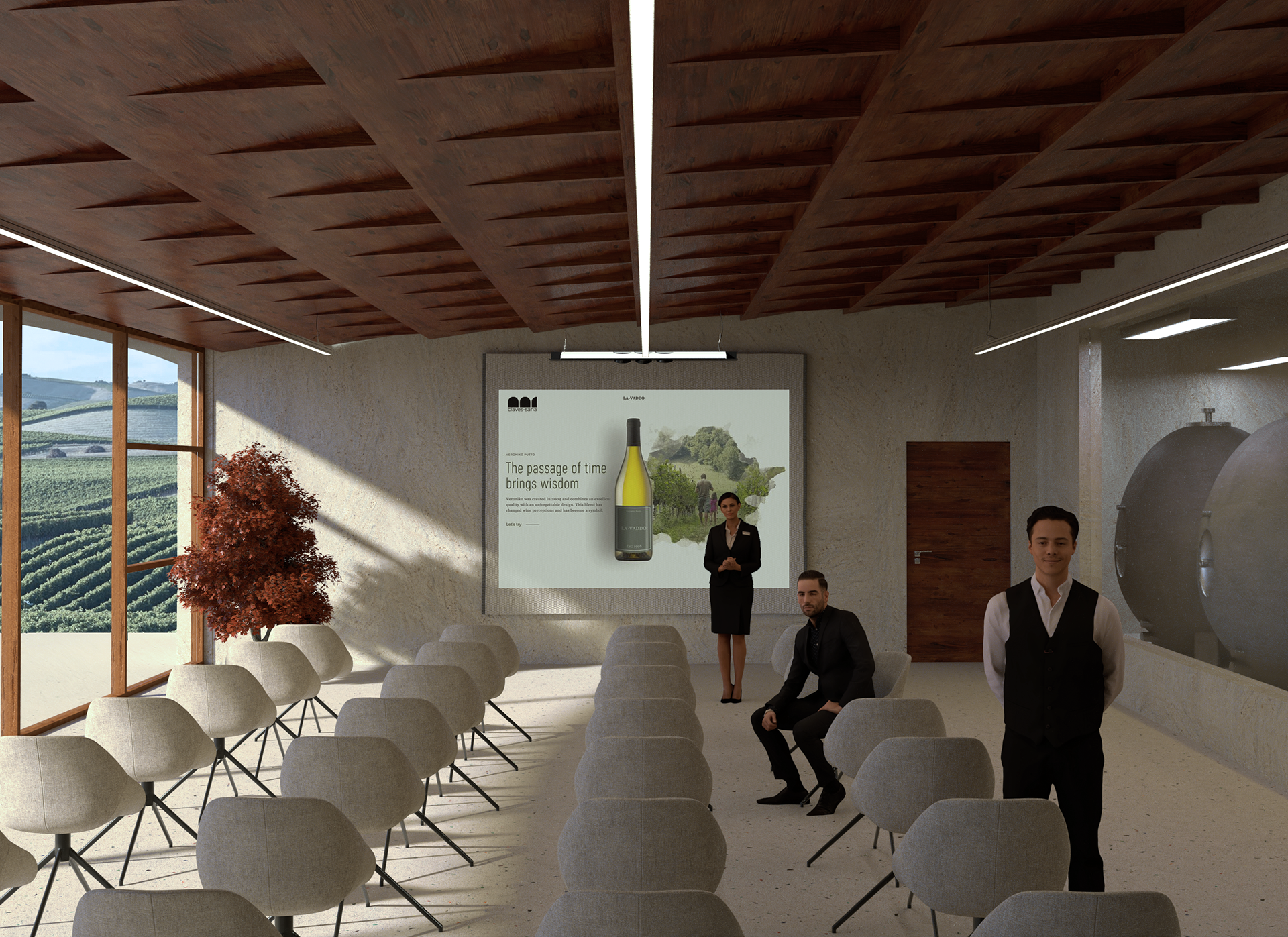
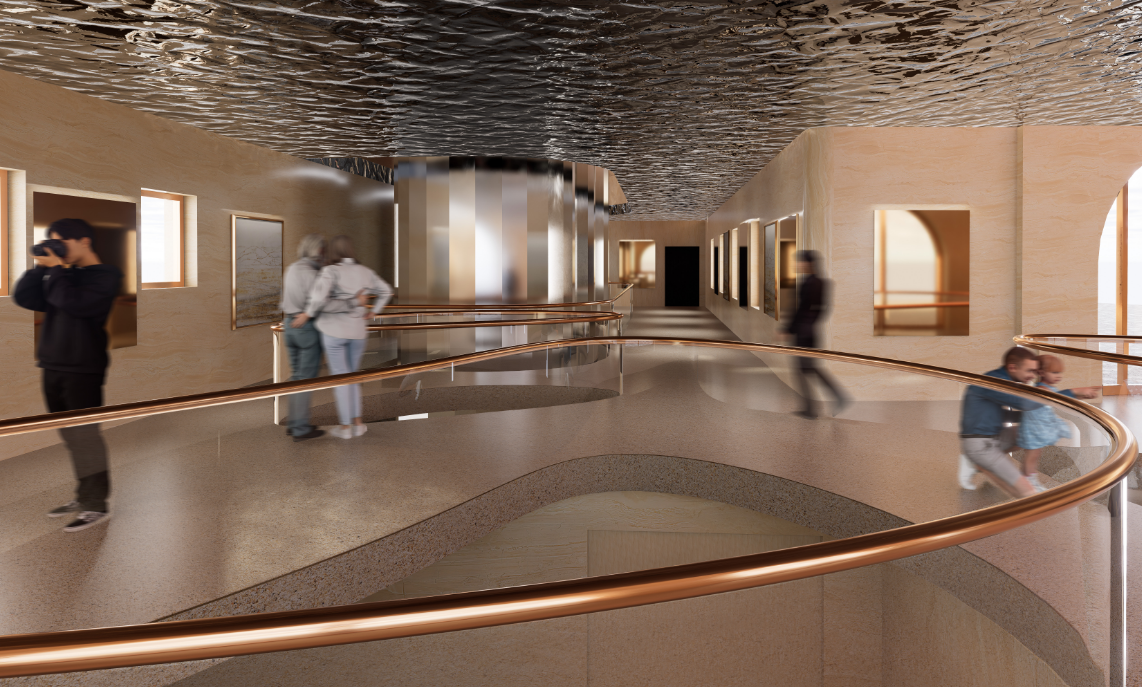
Langhe’s landscape is shaped by wine. Here, in a former 15-century monastery near Barolo, that heritage becomes spatial again. The project reinstates wine production as the central program of a new wine resort, embedding a full-scale winery underground. Our intervention focused on the production wing: designed as a subterranean journey that emerges from the hills, forming a continuous dialogue between architecture and landscape.
All works shown below are personal unless specified otherwise.
Location
Clavesana, Italy
Clavesana, Italy
Year
2025
2025
Type
Academic: Design with Climate
Academic: Design with Climate
Team
Noah Lenz, Aksu Omer, Aynaz Kavar, Aleksandar Sarov
Noah Lenz, Aksu Omer, Aynaz Kavar, Aleksandar Sarov
Software
AutoCAD, Rhino, Grasshopper, V-ray, Adobe Photoshop, Adobe Illustrator, Adobe InDesign, QGIS, MS Excel
AutoCAD, Rhino, Grasshopper, V-ray, Adobe Photoshop, Adobe Illustrator, Adobe InDesign, QGIS, MS Excel
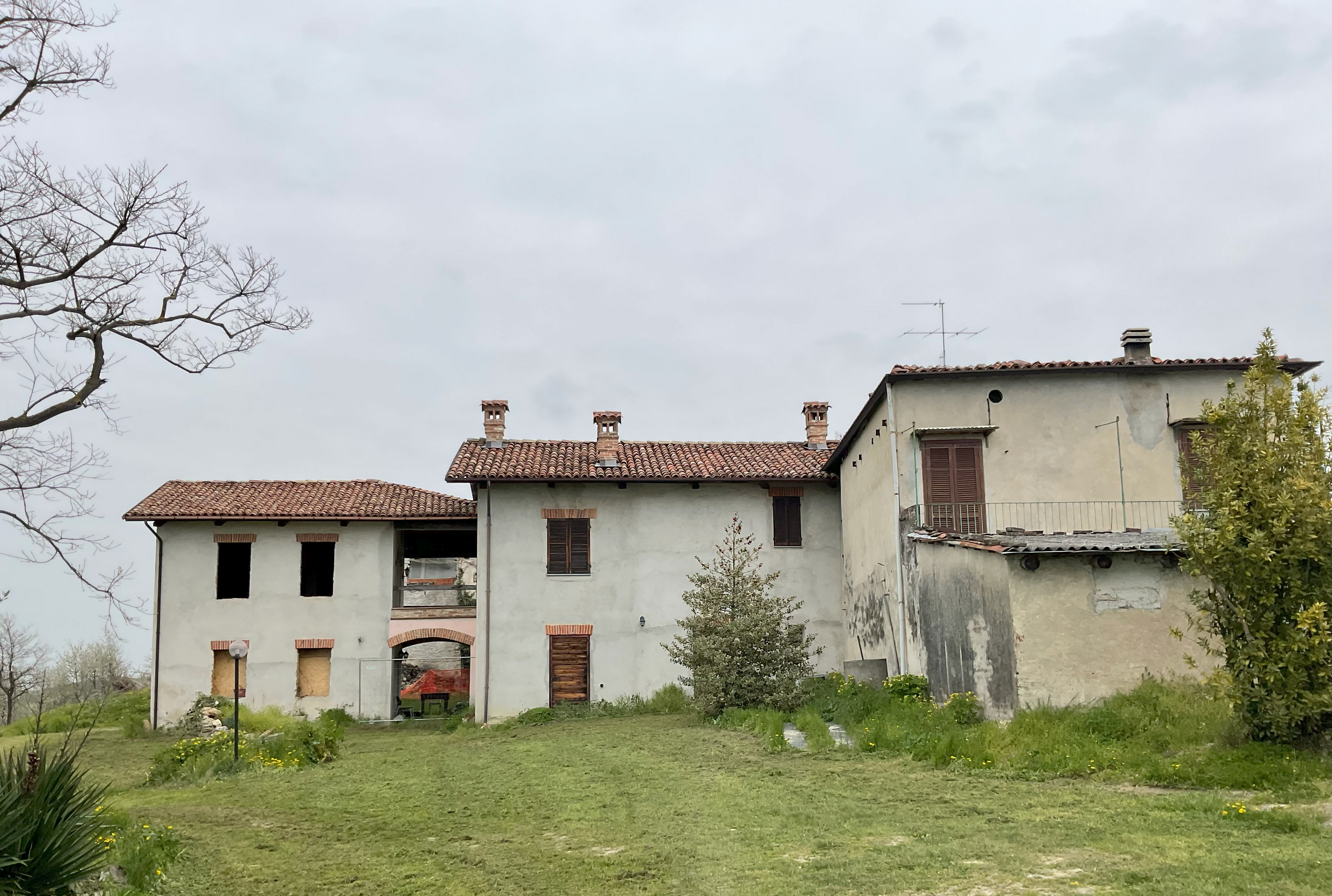
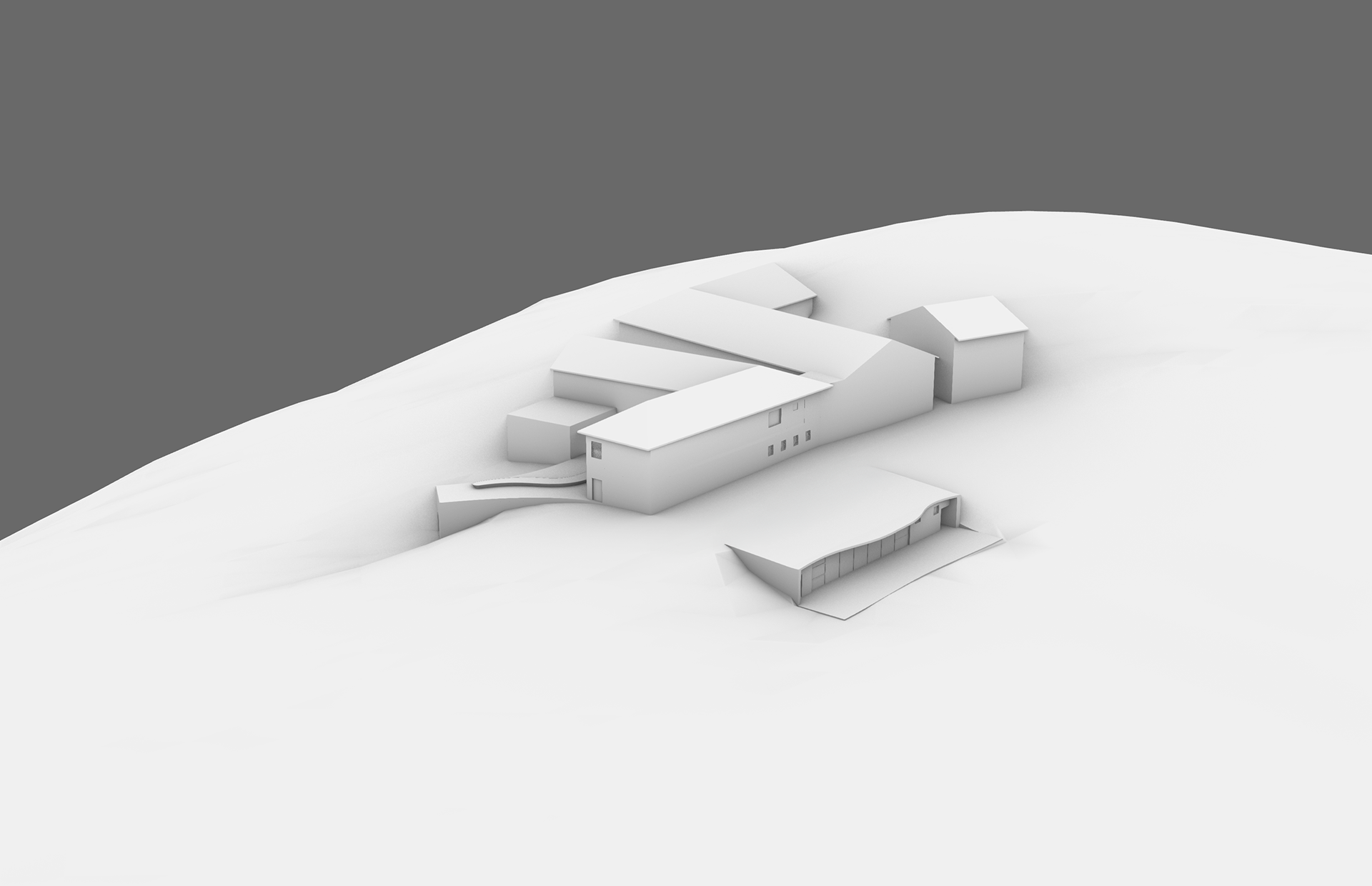
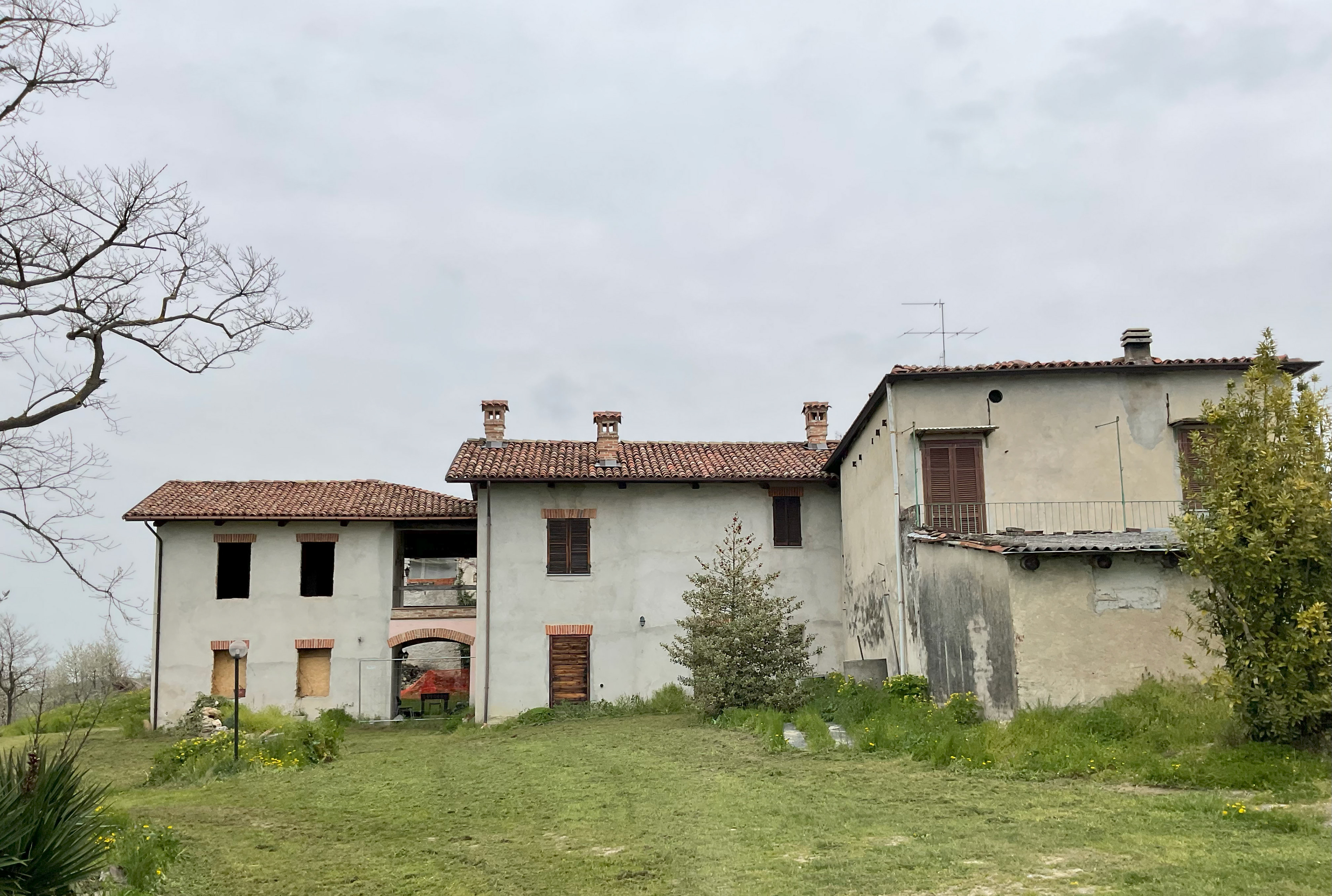
Condition of the site. 2025
Set in the winery hills of Clavesana, the project emerges from a town that has experienced gradual decline since the loss of its small industrial base in the 1980s. Clavesana today reflects the quiet rural life amid an aging population and dispersed settlements. Within this setting, the former monastery of Cascina Costa Villero becomes a point of reactivation.
With these ambitions, we turned to one of the area’s defining qualities: its landscape and surrounding vineyard. We sought to reinterpret a landscape often taken for granted, drawing out its understated rhythms and environmental subtleties through architectural response.
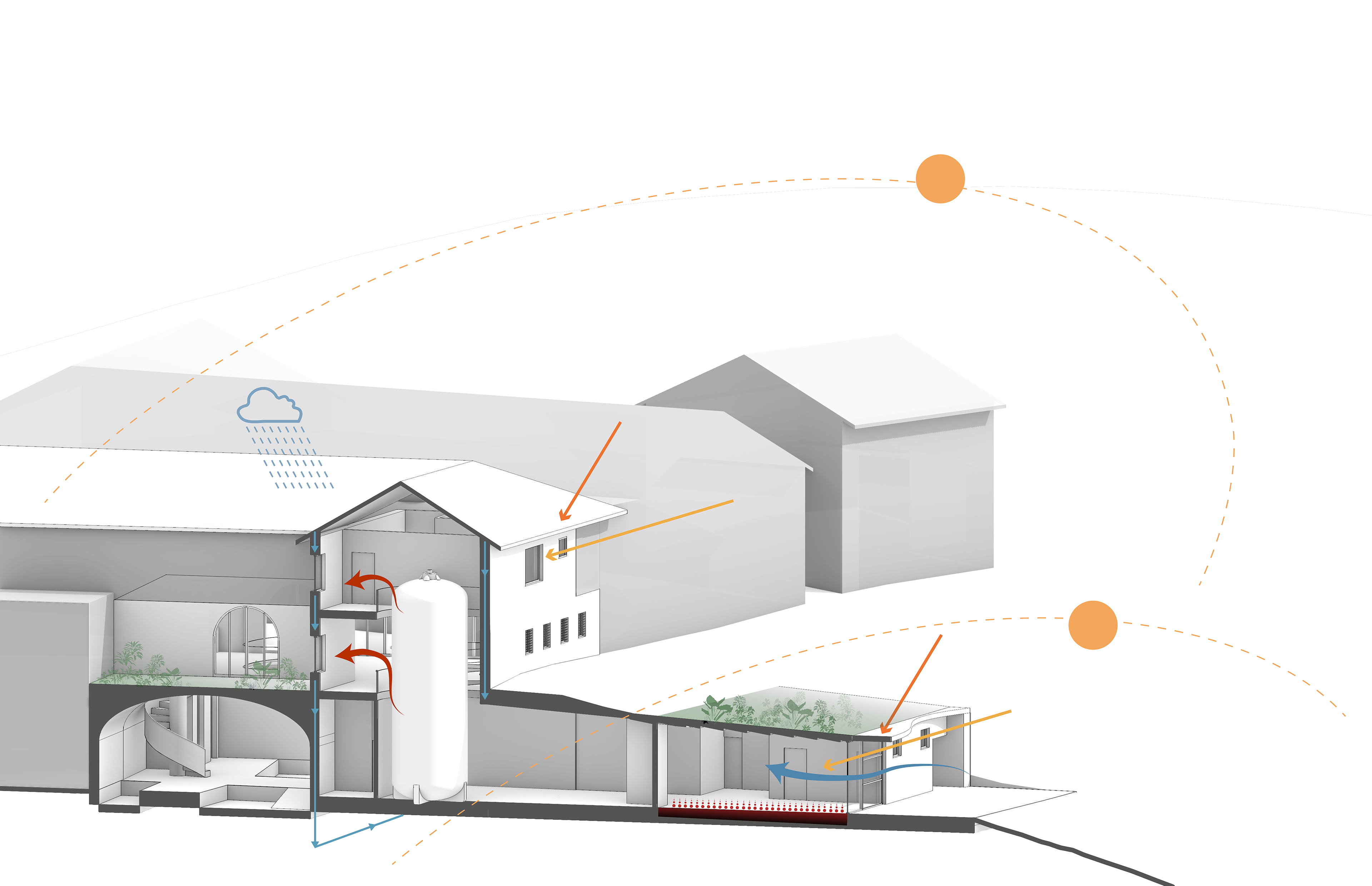
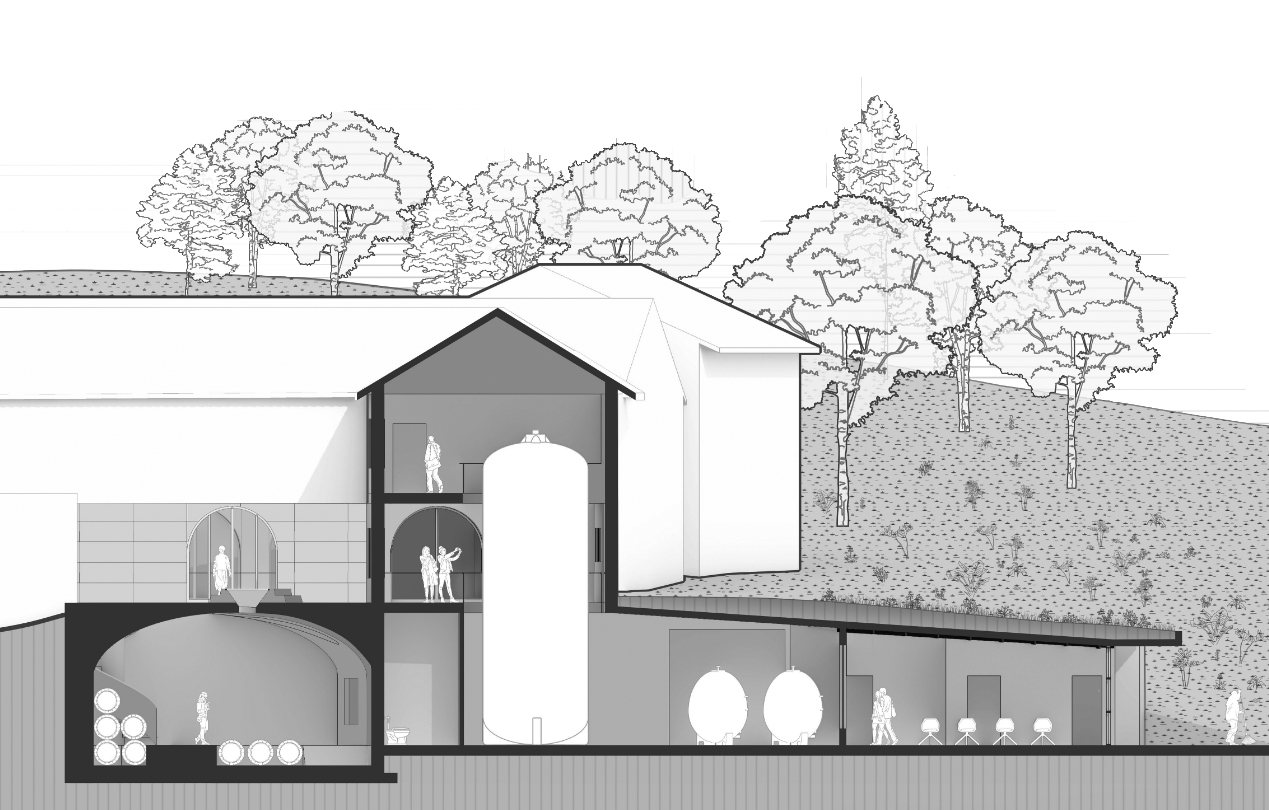
The project reinstates wine production as the central program of the new resort, embedding a full-scale winery underground. The structure runs horizontally southward through the hillside and gently surfaces in the vineyard, revealing itself gradually.
This overhang is optimised to allow a balance amount of sunlight in. The production wing is buried into the ground to create a cool, moist conditions required for oenological storage.
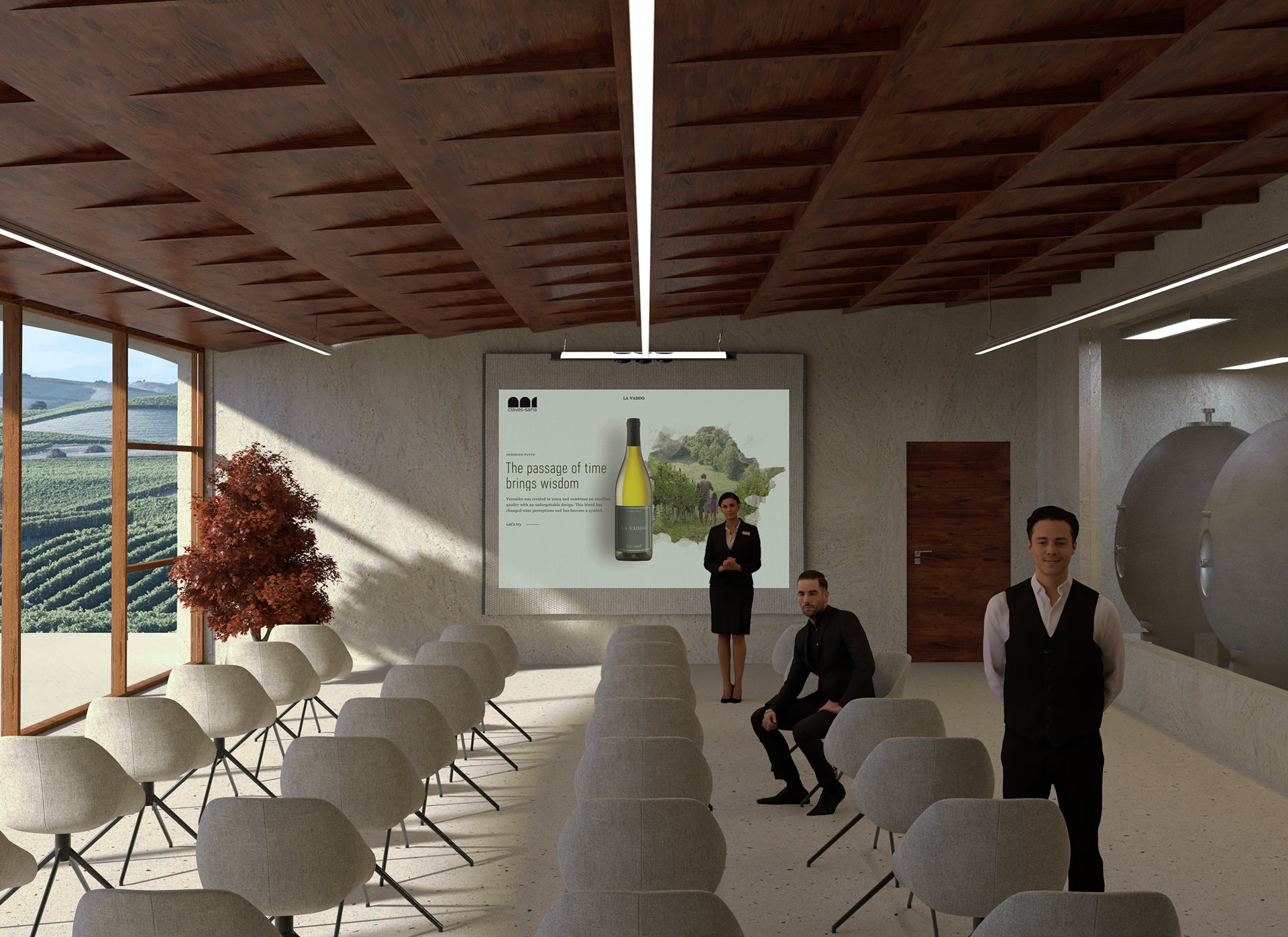
Aksu Omer, 2025
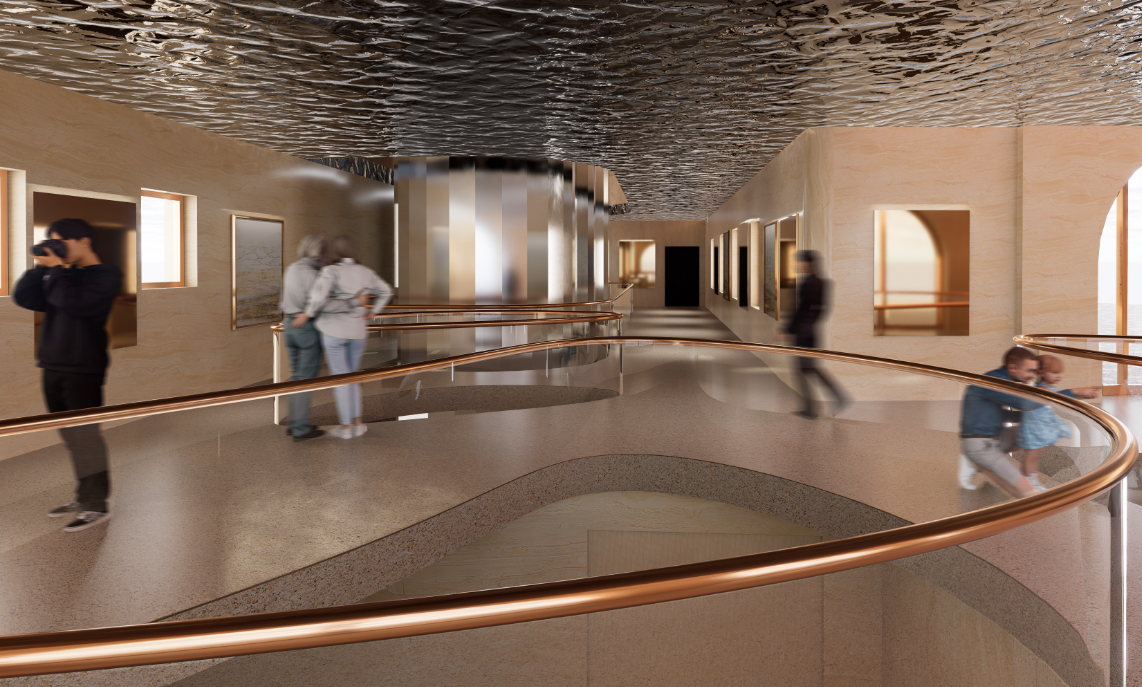
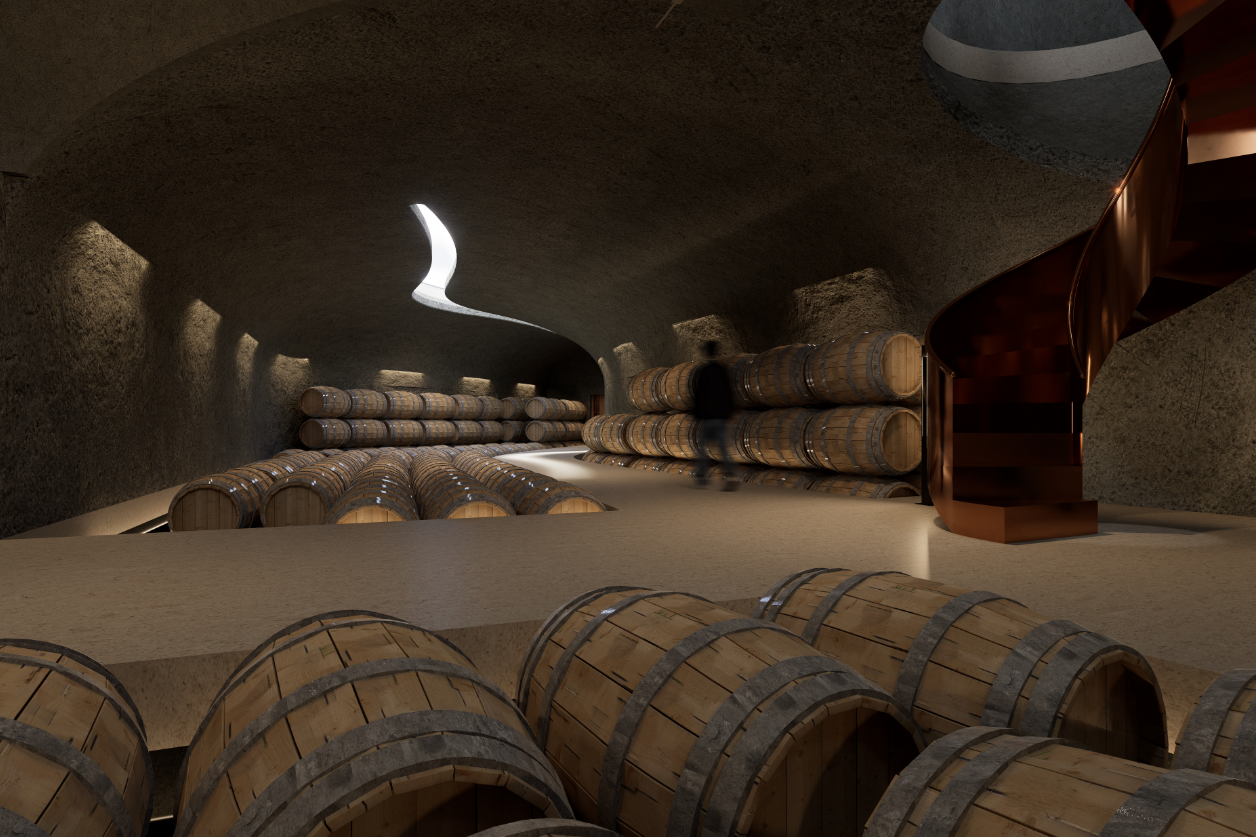
The space is organized vertically across three levels to maximize efficiency and integrate visitor circulation. The upper level serves as an interpretive walkway, combining museum and observation functions, allowing visitors to view the winemaking process through controlled openings and glazed sections. Beneath, the production floor houses fermentation, processing zones and barrel aging, where stable humidity and temperature conditions enhance quality control.
This vertical sequence establishes a clear hierarchy, from educational engagement above to precision production below, while maintaining a continuous spatial and visual relationship between visitors, workers, and the evolving product.
GALLERY